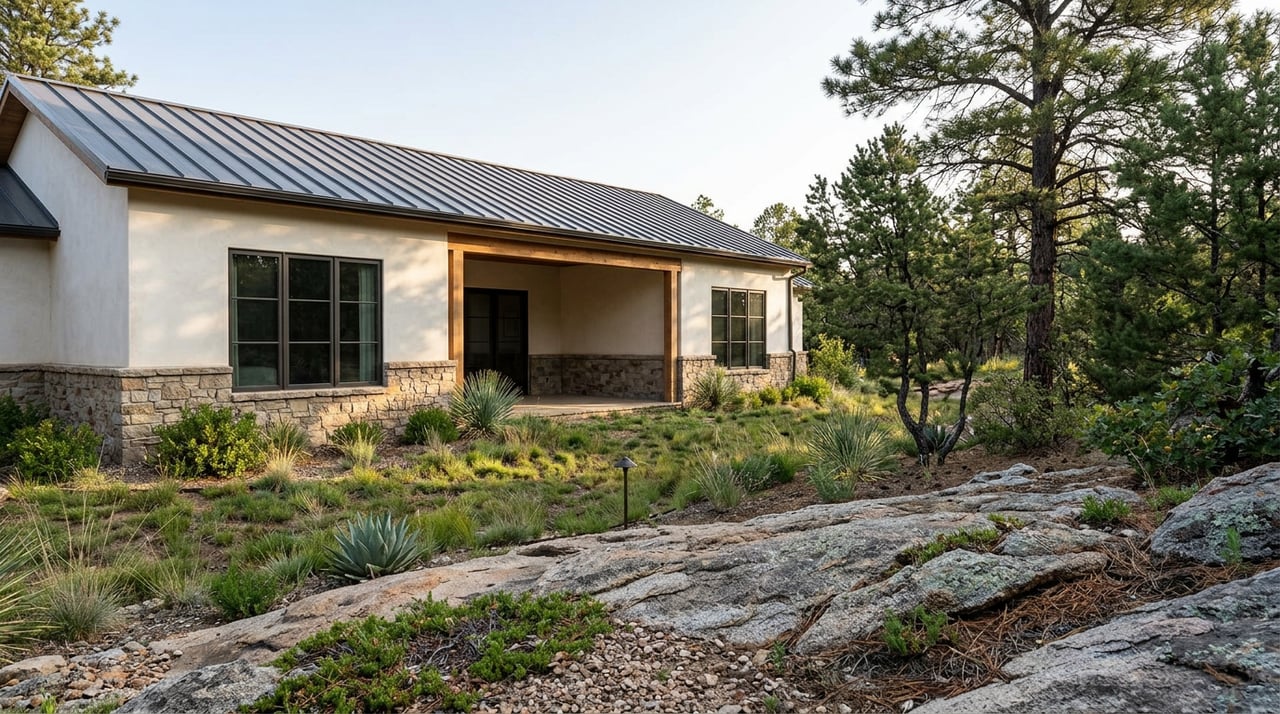
What to Know About Well and Septic Prescott Valley Homes
September 3, 2026
September 3, 2026
Two Prescott Valley listings can share a price, an acre count, and even a builder, and still commit you to entirely different closing timelines. The variable that decides which one you get is rarely printed on the listing sheet: whether the parcel sits on the town's water and sewer grid or on a private well and septic system. As of the three months ending June 2026, homes across Prescott Valley were changing hands at a median price near $452,000, a number that flattens two very different ownership experiences into one line item.
That flattening is the problem. A buyer comparing a home in Granville to one in Coyote Springs is not just comparing square footage and finish level. They are comparing two regulatory regimes, two sets of maintenance obligations, and, if either side is selling, two very different paperwork clocks.
Prescott Valley's master-planned communities, places like Granville, StoneRidge, and Pronghorn Ranch, are built on town water and sewer service. That is part of what buyers are paying for when they choose amenity-rich subdivisions over acreage. Head toward Coyote Springs, Lonesome Valley, Prescott Prairie, or Copperfield, and the conversation changes. These are the areas where buyers ask about wells, septic systems, and road maintenance because those things are not optional infrastructure someone else maintains. They are yours.
The line is not even clean at the subdivision level. Unit 20, often described locally as a premier non-HOA community, has parcels where city utilities already run nearby and others where a buyer would need to install a well and septic system from scratch. A four-acre lot in Copperfield and a two-acre lot in Prescott Prairie both trade on the promise of space and privacy, but only a soil test and a percolation test tell you whether that space can legally support a conventional system. Some Prescott Prairie parcels have already had that work done. Others have not.
This matters because the acreage premium buyers pay for space is not automatically a premium for buildable space. A lot can look identical to its neighbor and still fail a perc test the neighbor's lot passed years ago.
Arizona's rules for a conventional septic system generally call for roughly an acre of land in most unincorporated areas, a threshold that exists so the property has room for the original drain field and a backup location if the first one fails. That single requirement quietly disqualifies some smaller acreage-adjacent parcels that look like a fit on paper but were never surveyed with a system in mind.
State water rules add another constraint: a new well generally cannot sit within 100 feet of a septic system or drain field without written authorization. On a smaller parcel, fitting a house, a well, a septic tank, and a drain field into that geometry is its own design problem before a single wall goes up. Prescott Valley sits inside the Prescott Active Management Area, where the Arizona Department of Water Resources applies stricter review to new wells. Parcels of five acres or fewer need county or local health authority review before a domestic well application can even proceed, and exempt wells in the AMA are generally capped at 35 gallons per minute for non-irrigation use.
Local geology compounds the planning problem across much of Yavapai County. Plumbers who service septic systems throughout the county note that decomposed granite and caliche layers sit close to the surface in many properties outside municipal sewer service areas, which limits how well a drain field can absorb and treat effluent over time. A system that passes inspection on day one can still struggle in ground that does not drain the way a textbook expects.
Here is the detail that catches sellers off guard most often: Arizona requires a transfer-of-ownership inspection for any property served by a conventional septic system or an alternative on-site system, and that requirement is a state rule, not a courtesy suggestion from a title company. The regulation is direct about its own authority. As the state's own filing instructions put it, the requirement to inspect the system before transfer "takes precedence over any conflicting terms" in the sale contract.
The inspection has to happen within six months of the property changing hands, performed by someone who meets specific licensing criteria, an Arizona-registered engineer or sanitarian, a licensed septic hauler, a certified wastewater operator, or a contractor holding one of several specific license categories. Locally, Apes Septic Tank Pumping in Prescott Valley, operating since 1977 under owner Phil Ball, holds the National Association of Wastewater Transporters certification that qualifies an inspector under the state rule, which is the kind of credential worth confirming before you hire anyone for this specific job. A routine pumping visit from a general plumber does not automatically satisfy the requirement unless the technician performing it holds one of those qualifying licenses.
Once the inspection is done, the inspector completes a Report of Inspection form for the seller. After closing, the buyer files a separate Notice of Transfer with the state, a step with its own filing fee, within 15 days of the transfer. Miss the six-month window and the seller needs a new inspection, which means listing timelines and septic timelines need to be planned together, not treated as two unrelated tasks.
If you are comparing a well-and-septic property to one on town utilities, the honest math includes more than the sale price. Septic installation costs run anywhere from roughly $3,000 to well into five figures depending on soil conditions and system type, and that is before accounting for the possibility that a lot's soil and perc tests come back unfavorable. A well adds its own cost and its own permitting timeline, particularly on a smaller parcel inside the Prescott Active Management Area.
If you are selling a well-and-septic property, the transfer inspection is not a step you can push to the final week of escrow. Order it early enough that the six-month window still covers your expected closing date, and keep any prior Report of Inspection documents on hand even if a new inspection is required.
A few questions are worth settling before anyone writes or accepts an offer on one of these properties:
Does the six-month inspection rule apply if the septic system has never actually been used? There is an exception. If the system received a Discharge Authorization from the state but was never put into service before the sale, the transfer inspection is not required. The buyer still files the Notice of Transfer form after closing.
Is a standard septic pumping appointment the same as a transfer inspection? No. The transfer inspection has to be performed by someone who meets the state's specific licensing criteria and results in a formal Report of Inspection form. A pumping-only visit does not satisfy the requirement unless the technician performing it holds one of the qualifying licenses or certifications.
Can a well-and-septic property be converted to town water and sewer later? That depends entirely on the parcel's location relative to existing town infrastructure and is a question for Prescott Valley's utilities department on a property-by-property basis, not something that can be answered in general terms.
The utility line running through Prescott Valley will not show up in a median price chart, and it will not always show up in a listing description either. It shows up in escrow, in permit review, and in the six months before a septic system changes hands. Knowing which side of that line a property sits on, before you fall for the acreage or the view, is what separates a smooth closing from a delayed one.
If you are weighing a Prescott Valley acreage property against a master-planned home and want someone who can walk the utility questions with you before you write an offer, Jill Hughes is happy to schedule a free consultation or start with an instant home valuation to see how these details factor into your specific property.
Stay up to date on the latest real estate trends.



Get assistance in determining the current property value, crafting a competitive offer, writing and negotiating a contract, and much more. Contact me today.